
It has not been a good winter, nor has it been a particularly good spring.
Only two days of really hard frosts and just a few short hours of snow. Everywhere, I am told, is a sea of mud, making it difficult to walk anywhere off road, constant floods and huge difficulties for farmers.
And we now have road works which is quietly driving everyone mad. Some have been expected, like our own for increased fibre network, but there are others which have appeared all around us, which were not so expected. These have left everyone scratching their heads as to how they are even going to make it home.
With all this going on, I wondered whether wildlife was affected.
Dust, vibration and noise seem to be the worst offenders.
Not much dust around at the moment that’s all been well and truly dampened down – and generally speaking, the other two effects are too short lived to cause much of a problem. If they were building a bypass nearby this might be different.
Even so, I thought, what about worms? They can burrow to at least 6ft deep, so what was is it doing to them? Sorry, I can’t find an answer!
Frog Spawn
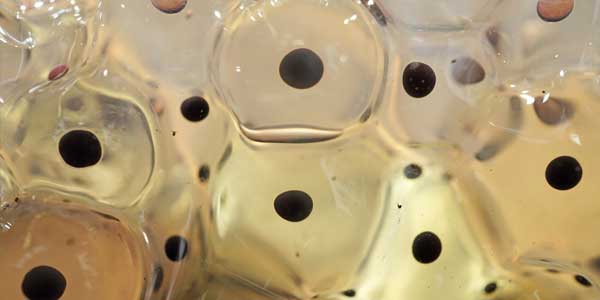
I started to look in the larger of my ponds for frog spawn at the beginning of February. Right on time, on the 4th of the month there were two big clumps of it.
There was also quite a disturbance in the water and I counted seven frogs all trying to do what frogs do at mating times.
I know that sex carries toads to extremes but I hadn‘t realised that it had quite the same effect on frogs.
They hung around for about 24 hours, leaving spawn that looked a bit like jellified caviar, and one exhausted looking frog – presumably the female.
Three weeks later, almost to the day, a plastic plant pot had blown into the pond.
It had landed sideways so that part of it was submerged over some of the spawn and as I stood there cursing the fact that I couldn’t fish it out,
I suddenly realised that it was half full of tiny wriggling tadpoles!
They had hatched on time – about three weeks – in spite of snow the night before and two or three quite hard frosts during the days preceding it. Good old nature.
If all the spawn hatches like that, I won’t have any slugs to worry about in my garden this year.
Blackbirds kept me amused for several weeks.
During January five males and a female were regular visitors.
The males grew increasingly cross with each other as time went on, ending up with vicious fights on the lawn as they sorted out their territories.
The female gave all the males the cold shoulder for some time but when a second turned up to join her, they both ran off in alarm every time a male turned his attention to her.
Now there is one male and one female and they both feed at different times.
For a while the female often stood around for minutes on end looking thoughtful. I can guess why because she then rushed about gathering bits of moss and this and that, on a home making quest. One of the males has quite a few brown feathers on the left wing and as he seems to be the most regular visitor, I suspect that he is the victorious one of the original five. I have called him Mr Pavorotti and for those who remember that far back, I would love him to be a successor to Mr Bocellii.
The dawn chorus is getting earlier, keeping up with the first light breaking.
It’s now starting soon after 5am. It won’t be long before they all begin to suffer from serious sleep deprivation, what with the light and newly hatched offspring to cope with. Not unlike humans really.
Referring back to my previous reference to slugs and frogs
Have you heard that gardeners should start to be kinder to those little slimey things?
It was even on a news programme this week.
There are only one or two varieties that actually attack our garden plants, the most common of which is the common garden slug.
It is about 3cm long, brown and striped lengthways, sometimes with tiny gold, orange and yellow spots on its underside.
So what we’re supposed to do is throw them onto our compost heaps where they will happily munch on all the rotting vegetation therein.
They omitted to mention whether they would stay there or wander back at the first sight of something juicier a few yards away..
Well, I’m all for saving wildlife but I do draw the line at this one.
I just cannot imagine the average gardener going around and picking off and turning over every slug they find to make sure its black and striped and attractively spotted with orange, gold and yellow beneath, and then transporting it to your compost heap (that‘s if you have one).
Your average gardener is as keen as anyone to preserve wildlife, but as there rather a lot of slugs about, if he did this he probably wouldn’t have time to have a garden at all.
Am I wrong in feeling slightly indignant and that this suggestion is slightly batty?