NATURALLY THINKING

By Margaret Waddingham

Articles published in the Caundler Magazine

Another year is drawing to a close already

Once again time seems to have flown by and suddenly the season of Christmas and a new year are upon us.

I see that this time last year we were having an awful lot of wind and rain.
What a surprise!
At the beginning of this November, wind and rain were here again, this time, in our village, quite dramatically.

Pity the poor essential workers and particularly all those visiting carers.

I have one four times a day and they were tested to their limits.
One had to turn back to exchange her car for her partner’s 4×4 and finally struggled for several miles to arrive here over an hour later.
Another arrived for the lunchtime visit but then found herself stranded for about 2 hours, unable to get out in any direction.
The third one didn’t make it at all but the last one did – just.
It didn’t matter as far I was concerned because they have many more needy clients than I, but it tests even the most ardent of these wonderful people to their limit, who always do their best and travel with wellies stowed away just in case, but not all have access to a 4×4.

The storm wasn’t as bad as the Halloween one that reeked so much havoc two years ago.

But this year there was the added problem that autumn arrived so late that many of the trees were still laden with leaves which choked all the drains.
Then everything went into overdrive with late colour – buttery yellow, glowing red-gold and burnished copper.
That phase didn‘t seem to last long, for many were practically stripped bare by the winds, almost overnight it seemed.

The two rowans in my garden, both laden with berries, one orange the other bright pink, performed beautifully.

The leaves against the one that bears the orange berries glowed even on the dullest of days, whilst those on the other don’t do much but the bright pinkness of its berries make up for it.

As usual, blackbirds are already feasting on the first whilst the others will be left until well into the new year.

Perhaps birds don’t find that pink things taste so good at this time of the year.

I haven’t been able to get out much recently and have only had one or two trips on Genevieve.

The last occasion was at the end of October and I couldn’t help noticing hazels in the hedge at the bottom of Rowden Mill Lane, the leaves of which had been nibbled into intricate lace patterns by some small creatures too tiny for me to see but which are most professional in their craft.
Whether the hazels appreciate this alteration in their leaf structure I don’t know, but only a few branches have been affected per bush and it doesn’t seem to have done much harm to them. With the light behind them, they looked really beautiful.
I think – though I could be wrong – that the little crafters were hazel sawfly larvae, and they seemed to have been busy since early summer when I first noticed them.

Since my outings have been rather rare, I am especially enjoying reports from friends about all that they see.

How about this for things Janie noted for the past week?
There is a dead oak tree in a large field coming out of Milborne Port towards the Purse Caundle turning.
About 20/30 egrets were perched in it one day at the time of the floods and although both of us have often seen these birds in that field in the past, neither of us have ever seen them perched in large numbers in a tree before.
We wondered if they’re a new breed that don’t like getting their feet wet.

When the brook was in full spate by The Trooper, a kingfisher flashed by.

Sky larks were still singing when it wasn’t raining and a flock of fieldfares flew over her head.
Hollies were full of shining berries and she came across quantities of field mushrooms, some of them as big as dinner plates.
We both commented on the number of red admiral butterflies this year, and agreed that they are still finding late flowers in the gardens to feed on.
She described it all to me in detail and I can share her pleasure and excitement.

I also followed the antics of rabbits that another friend watches on a neighbouring lawn.

One morning, an adult and a youngster were quietly breakfasting there when a sparrow hawk, being mobbed by crows, swooped down on them.
She opened the window and it flew off into an apple tree, only to reappear a while later, obviously feeding on something and accompanied this time by a couple
of magpies and crows, presumably hoping for discarded scraps. The following morning, an adult rabbit was out there on its own.
Whether it had to come to look for its offspring or merely come out for a quick breakfast, she couldn’t quite tell.

Now here’s a thing you can bring up during a lull in conversation.

Did you know that the earth is actually spinning a little faster, with the result that time really is passing more quickly?
This is worked out on atomic clocks which are supposed to be accurate to within – I kid you not because scientists say so – ten quadrillionths of a second!! (This deserves two exclamation marks.)
Fortunately it looks as though this time jump isn’t going to affect any of us anytime soon, but we are still a bit to blame because it’s partially caused by climate change.
However, experts still believe it is within normal fluctuations, so that’s all right and I think I can now be excused for saying that time seems to go so fast these days.

Which takes me back to my opening sentence – another year is drawing to a close already.

It’s been rather a strange one again weather wise, with a heat wave in the month of June, quantities of the wet stuff in most of the others and, we are told, above average temperatures.
At least we haven’t had the awful fires they have had in other parts of the world.
Any snow forecast for Christmas do you think? Probably not.

My hope for the coming year is that the world and its people will calm down and be a more peaceful place.

And my hope for all my fellow villagers is that everyone will have a peaceful and very happy Christmas.
Read More

Do insects suffer from heat exhaustion?

I’ve never really minded spiders. but this year I seem to have an awful lot of them.

I’m fortunate that they don’t worry me like they do other people, although, I’m not so keen on the large ones that suddenly scurry across the floor in late autumn and winter. Even so, three days running I heard of people being taken to hospital with quite serious spider bites and this had me wondering what this latest bit of news was all about, so, as usual, I looked it up.

It seems that the most likely culprit is the false widow spider.

These clamber in, probably taking up residence in a kitchen or conservatory and should you be unfortunate enough to come across one, it can cause a bite that can swell and can cause severe pain and swelling, even chest pains.
There are quite a few others that can give you an unfriendly nip.
I was bitten by one once on my finger and it swelled slightly, but was no worse than a wasp sting, and was gone in 24 hours.
However,don’t worry, the false widow isn’t that common. Even so, I’ve noticed something else rather odd this year.
The reason spiders usually decide that they want to share our homes is because they want to find a mate, or because of imminent cold, wet or very hot
weather.
We’ve recently emerged from the wettest July and August, followed by a heat wave that has broken all records from which we are just emerging as I write
this.
So that’s it, it’s another thing we can blame on climate change!
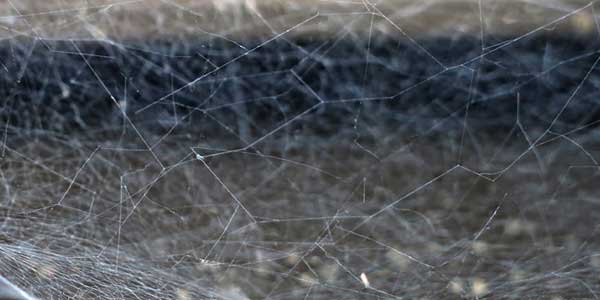
I shall continue to shake out my towels in the morning when one may drop out and when I turn back the covers of my bed at night, I may well find one lurking either in it or beside it, and if I move a photograph on the window sill I’ll discover that it is firmly attached to the adjoining one by a thick web, even though it was only dusted two or three days previously.

And tell me this, do insects suffer from heat exhaustion?

I ask this because I have found several biggish spiders hanging from their webs, looking very dead.
Then, when I grab them with my grabbers, they suddenly come to life and wave their legs at me, which is a bit unnerving.
If I pitch them outside, they come scuttling back.
And who was it who started the old saying, ‘Blow the cobwebs away’?
That’s a laugh. Have you ever tried to get rid of them from your fingers by standing in a gale, waiting for it to blow away?
Not likely. It’s much too strong for that, which is why they can also withstands torrential downpours and still remain undamaged.

In my last article I was bemoaning the fact that I had seen no bees in my garden.

Can they read?
The day after I had sent it to the Caundler team, bees, of all sorts arrived from all quarters. There were bumbles, honeys and wild ones, together with
a whole variety of butterflies, all arriving on mass.
It so happened that on the same day, a few different flowers suddenly bloomed. The bees have remained ever since.
They particularly like my Aster Monch and sedums, but it is gratifying to see that, having at last found me, they are staying to try all sorts of other things.

I have had more butterflies in the garden than I have had for a number of years.

It seems to have been a particularly good year for them generally, as I have seen a lot of different varieties mixed in with the usual ones in Rowden Mill Lane,
including commas.
I don’t usually see many of these – perhaps I just haven’t been looking.

Any minute now I expect the majority of house martins and swallows will fly away to somewhere warmer for their winter break.

I wonder how long it will be before they decide that the summers here are hot enough to chance staying for the winter too.
I have had the usual second or third brood of house martins in my three nests.
I always get worried about these late offspring, wondering how they manage to cope with the long journey ahead of them.
Each morning, they leave their nests and spend the day on the wing, wheeling and circling with their parents, feeding and practising their flying skills.
I don’t know where they go during the remainder of the day, but they return each evening to sleep in their nests.
I hear their sleepy murmurings first thing each morning like grumpy teenagers, being urged by their parents to come and catch their breakfast.
The migration of birds has been well recorded.

What still seems to be a bit of a puzzle is the migration of fragile things like the painted lady butterfly.

To me, some of the statistics argue against each other.
I read one set that says that these tiny, fragile creatures have been known to fly from the Sahara to the Mediterranean – a distance of 2,500 – the largest distance recorded. Some have even made the round trip, hitching lifts on the back of southerly winds and even climbing to altitudes of 1606 feet at 30 miles per hour so that a single group can make the journey in one go.
What seems to defy my logic is another piece of information that says that they only live for 2-4 weeks.
I would really like someone to explain, that if it has hatched in Africa, is there really time for it to get to our country before it dies and if it hatches here is there really time for it to do what it has to then fly back?
Is it the freshly hatched ones that fly back? And, whichever way you look at it, is there time to fly all those miles and still be fresh enough to mate and lay more
eggs?
Perhaps it’s just me being particularly dense, but I just don’t get it.

Read More

Lovely few moments

I’m sure there are some people who are not pleased to see foxes, probably with good reason, but I am not one of them.

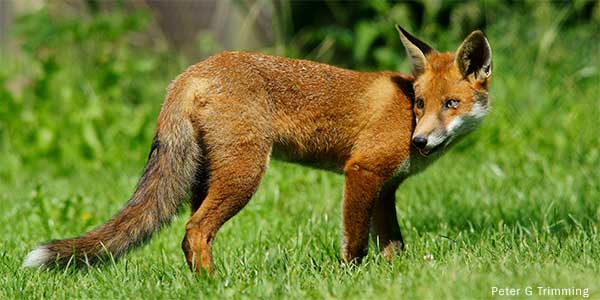
Travelling slowly down Rowden Mill Lane one warm day recently, I stopped to watch something small and russet stalking things beyond an open gate.
He was a little past the cub stage, so had lost that cuddly look that all young animals have, but all the same he was very attractive from where I was watching.
He was on the boundary between two fields, crouching, placing his paws carefully one at a time as no doubt he had been taught by parent and instinct.
Small clouds scudded over the sun making little shadows.
He pounced on them, crouched and pounced again. Then, he seemed suddenly to get tired, so he sat down. Unfortunately, something made him turn round, he spotted me and was gone in a second.
Lovely few moments.

Thrush in the garden

I was so thrilled when I saw a thrush in the garden after an absence of several years.
Even better though was that he or his mate had been using the stones beneath the front garden seat as an anvil judging by the countless snail shells smashed there. Probably a nest nearby but I didn‘t spot that.
My friend from mid-village has been lucky though.
She had a family of three young thrushes in her garden, which she calls ‘The Three Thrushkateers’!

Families in the garden.

All during the month of June there were families of robins, blackbirds, goldfinches, starlings, dunnocks, blue and great tits and sparrows in the garden.
It’s been very entertaining watching how the parent birds taught their offspring how to fend for themselves in much the same way that we wean our own offspring from bottle to feeding themselves.
For the first few days the parent brought them to the nearest food supply and stuffed each open, squeaking beak with food. Gradually the parent spent longer on feeding him/herself until the youngsters cottoned on and decided the only way to get anything was to join in.
From then on, they seemed to be on their own, and that was where the similarity with human babies ended.
Starlings fought and squabbled noisily round the feeders and blackbirds and robins became really aggressive towards their poor parents, especially the robins who turned into the most ungrateful of offspring.

Elegant manners.

Other birds, on the other hand, such as tits, sparrows and dunnocks have the most elegant manners.
One day I found a delightful little clutch of three sparrows on the ramp, sitting in a fluffy triangle just outside the garden door.
On other days I have found baby blue or great tits sitting in close formation on the handrail of the ramp or on a branch of the apple tree.
The blackbirds seem to fledge in a random sort of way. Does this mean that they fledge one at a time whilst other varieties do it all together, I wonder? I noticed that one of the baby blackbirds seemed much slower than the others. In fact, he got slower and slower and I was quite worried about him. Then I found him (I assume it was the same one) dead under the apple tree. I’d like to know what caused his death; all the others seem fine.

Avian flu – quite safe to carry on with our feeding

Which reminds me; after being told that I shouldn’t keep feeding the birds because that’s the way avian flu is spread, I checked with the RSPB.
It seems it’s the sea and estuary birds that gather in great groups to feed and nest that are the ones that are the real culprits.
Our garden birds do not gather in such numbers, they are constantly on the move and like to nest in private.
Providing the feeders are cleaned regularly then it’s quite safe to carry on with our feeding routines (thank you Janie for cleaning mine!).

Rewidling my small garden!

It does rather irritate me that people keep telling me to rewild a bit of my small garden. Where, for goodness sake?
Anyway, the flowers I grow are always chosen with the greatest care to be attractive to anything that pollinates.
Having been searching the lanes round here lately to spot insects, I have come to the conclusion that I have many more in my garden than there are in Rowden Mill Lane, Holt Lane and The Wheel put together. That includes umpteen hoverflies, different sorts of beetles and large hatches of at least six sorts of butterflies, as well as dragonflies, damselflies and ladybirds.
There does however seem to be a general lack of bees of any sort anywhere; even bumble bees seem to be in short supply, I was delighted one day to see three bees, and some wasps around the pond.
Yes, even wasps have their uses as pollinators. I can’t help wondering whether the weather last summer and winter had something to do with our ever worsening counts of anything that flies or buzzes. I can only conclude that they were severely hit by last year’s drought, when some much vegetation necessary for their well being shrivelled and died, followed by the severe frosts of this winter.

A place that sang joyously to the glory of God and nature

All this talk of rewilding got me thinking.
I have a mid-year birthday and on that day for years, Brian and I used to visit a garden. When we were in Devon one of our favourites was Dr Smart’s Garden, now re-named as Marwood Gardens, near Barnstaple.
One particular visit we sat beneath a large oak just outside the village church to have our picnic lunch, then went in to look round. Although the little church is really outstanding, the thing I most remember about it is the churchyard. It had been allowed to go wild even all those years ago and it was breathtaking, awash with the most wonderful dog and field roses, honeysuckle, dog daisies, many other wild flowers and even brambles and ivy.
Perhaps at that time it was allowed to get like that because they had no-one to keep it under control, but I gather it is still like that today.
I particularly remember one child’s grave – Victorian I suspect – which was guarded over by a large, soulful looking angel who was bedecked with roses and honeysuckle and a bit of ivy that had covered her feet like sandals.
If ever there was a place that sang joyously to the glory of God and nature, that was it. I wonder, is it not possible to let our bowling green of a churchyard go in the same way? Or just a bit of it? Please?
Apart from anything else, from a purely practical sense, it would save money on the mowing. Of course, wild flower areas don’t look after themselves but I’m sure there are enough people and children round here who would love to help. I’d be first there if only I could.
Margaret Waddingham

Read More

Bird songs stop me in my tracks

At 3.30 one afternoon, just as April was tiptoeing into May, my daughter was walking round Alners Gorse and sent me a video of a nightingale singing in a nearby bush.

I found something on my clever computer which told me about the number of phrases in the repertoire of some of our most tuneful birds.
A lark has 340, a blackbird more than 100, a song thrush up to 50, likewise a curlew, but the bird that beats the lot is the nightingale that can sing up to 1000!
Although one of my favourite birds is the curlew, all bird song is so incredible it stops me in my tracks.
The nightingale however has phrases which vary from whispers to something that almost moves me to tears it is so beautiful. All these phrases can vary with each individual bird but even so each one is most impressive, if for no other reason than someone, somewhere has the talent to work out how to make these counts.

I like ponds

Towards the end of February my ponds, both big and small, were completely emptied as a general clean up and to try to get rid of the mass of blanket weed. At the bottom of the big pond there were three frogs that remained sitting there whilst it was being refilled. Six days later, a mass of frog spawn appeared.
Not surprisingly, this turned to a gooey mess after that particularly hard frost we had. A few hardy little tadpoles survived for a while, but these met an unfortunate end, suffocated or strangled amongst the mass of blanket weed that had once again taken hold. I had been using a nature friendly solution once a week to rid of the stuff but it was obvious that I was losing the battle so I bought some barley straw logs. These seemed to be doing the trick for a while, but now my ponds look so miserable that I don’t know whether I need twice as many logs or to call in the services of a pond specialist.
If anyone reading this knows what I should do, please contact me. I am getting desperate to the point of having the whole thing filled in and turning it into part of a rockery and that really seems one problem too many. Anyway, I like ponds.

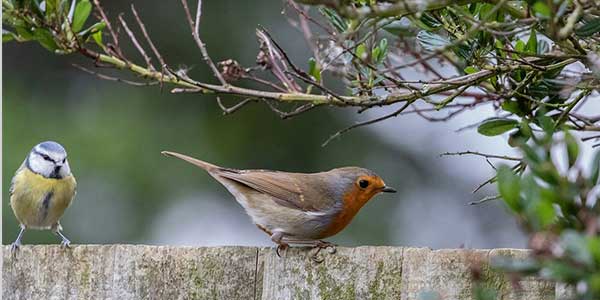
My Robins – Mr or Mrs Fraser?

I do wish robins had worked out some way of distinguishing themselves between male and female.
I suppose they know, which is the important thing.
I have called my regular visiting one Fraser, for no particular reason, but now I also have two youngsters who have been brought here by either Mr or Mrs Fraser.
Whichever one it was proved to be a most attentive mother/father who, in less than a week, taught them to fend for themselves.
Some days they formed a rather disorderly queue of two but one day, mother/father tried to exert a bit of parental authority by having a feed itself and was actually seen off by junior.
Lessons for the young in bird world it seems, can only go so far.

I have at last managed to get out on Genevieve!

It is such a relief, I don’t know why I was making such a fuss about it.
My first trip was down Rowden Mill Lane and the things I most appreciated were the scents and the bird song that was so much more varied than that which I hear from the garden. The cow parsley is in great swathes – I think that is where the scents were coming from – but what I found even more interesting was that there was the sound of insects, lots of them buzzing all over the flowers.
I haven’t heard that for some time and although most of the sound seemed to come from different sorts of flies, it didn’t matter. They were all doing an important job.
My second trip was round The Wheel just after the floods. There were certainly signs of them though. Along that top road, the ditch was full in front of the willow where, I am told, there used to be a pond. This ditch often fills right up after a lot of rain and flows over the road.

Plusess in my life – seeing bluebells on Bulbarrow

Whilst on the subject of all the plusses in my life, I can now get into my daughter’s car because it has higher seats and I have a swivelling thing to sit on, a present from a kind friend. ~ This means that my son-in-law has twice taken me out for a drive.
The last one was to Bulbarrow to see the bluebells. What a sight they are.
Every year they seem to get better. How anyone can drive past them at speed without stopping to stare beats me.

Read More

I have a new window feeder

It took the robins a year or more to tempt anything with the previous one but finally, this winter, having moved it up and down to an assortment of heights, robins eventually found it.

So did a blackbird but he could never quite work out how to land on it because, being larger than the robin, he kept bumping his head on the cover of it – the cover of it which was supposed to keep the food dry.
It was quite funny watching him. He would sit just above it on the railings, working out the best way of getting at it, cocking his head this way and that, then making several abortive jumps towards it.
He tried jumping up to it from ground level too but that didn’t work either.
Last month the plastic cracked so I sent off for this posh new one. It has a large tray, a little extra one, and soft prongs at each end to hold fat balls.
Its now in place, filled up with meal worms and other delicacies for the robin, plus the fat balls, which it also seems to like, even though the balls are in danger of turning into suet puddings in the recent rain.
I think my visiting robin is actually a pair, but it’s impossible to tell males and females apart even though I have tried hard to find any distinguishing feature, though one just seems to behave slightly differently from the other.
One or other of them found this feeder almost immediately and scoffed large quantities of worms at a time.
Now there is a regular visit from a lady blackbird, who had no trouble at all about the access, and they have been feeding alternately in a well mannered way.
Occasionally a rather handsome male blackbird drops by but he doesn’t get much of a look in. I am still waiting for the various tits to find it.

I started making notes for this article near the end of January when we had a cold spell but water was still pouring off the fields.

Come March and programmes aimed at gardeners were warning us not to use tap water to water our gardens.
It has never occurred to me to water the garden at this time of the year, but the Met people warn us that many reservoirs are still not full after last year’s drought so unless we have some really good downpours in the next few months, it doesn’t bode well for this year either.
As I write this we are in a showery spell, so fingers crossed that we will have lots more to come this spring.

All the same, this winter, and the spring so far, has been a challenge for gardeners.

In an effort to beat the drought, I, like many others, tried buying several drought resistant plants and what happened?
We had three really hard frosts and some of these haven’t survived. After all they are of Mediterranean heritage, so they are used to warm, dry conditions. It’s so hard trying to decide what to do for the best at the moment.

Yew Trees

I had always understood that the reason yew trees are so often found in churchyards was that they were planted there to keep cattle and other livestock out because all parts of yew are poisonous.
As the dead were treated with great reverence, it made sense not to encourage anything that would make a mess over the graves. Then a friend told me of a programme she had heard which offered another angle altogether.
Yews can live to a very old age and many found in churchyards are 1,000 – 1,500 years, much older than the churches that were built there. It is very difficult to age a yew precisely because there is no definite series of annual growth rings after about 400 years and it continues to resurrect itself constantly by means of side shoots.
The resultant stump in the midst of all these shoots is often hollow but filled with rotting wood caused by a fungus The older they get the greater their girth and there was one that was recorded in Leeds in Kent that was so large that it was said to have been lived in by a family of gypsies in the the hollow interior. I suppose the rotting wood made quite a comfortable mattress. However, the size of its girth isn’t always an indication of age. A naturalist in the 1980’s found one measuring more than 14 feet but concluded that it couldn’t have been more than 230 years old because the gardens it was growing in were designed by Capability Brown and the yew was recorded as being planted then.
It seems that my original theory about yews keeping livestock at bay is way off the mark. Hundreds of years ago, when there were far more trees around, it is
much more likely that church sites were deliberately chosen near yews because it was thought that they would help to shelter the building and successive church
authorities added more later to continue the tradition..
Having said that, yews are a definite danger to all living creatures, even the leaves and bark. Yet these same toxins can be extracted to provide certain
treatments for breast cancer, so the tree has probably saved more human lives than taken them. Strange isn’t it?

By the way, I know I’ve said it before, but should you get the impression that I have a brilliant fund of knowledge, let me assure you that I haven’t.

I just have some good reference books and on this occasion I have a most helpful one all about British trees. Since this is an edition of The Caundler which is all about books, this one is called ‘Out of the Woods’ by Will Cohu and it is full of fascinating facts about British trees from recognition to tree-biography to what it calls ‘tree gossip’. It is a fascinating book and one that is useful to have around if trees mystify you as much as they do me.

Read More