NATURALLY THINKING

By Margaret Waddingham

Articles published in the Caundler Magazine

Happy Christmas to patients and staff in hospitals everywhere

Wonderful view of trees and birds from Yeovil Hospital

There is little that can be seen from the windows of a hospital, except I had a wonderful view of the tops of Yeovil’s trees changing dramatically.
Each day they seemed to change and deepen and grow richer.
The views reminded me of those pictures I’ve seen of the Canadian and American trees, though Yeovil doesn’t have quite the same drama.
The only other things that were visible were the birds, seagulls and rooks mostly, although there was a trio of ducks that flew in V formation in the same direction at almost the exact same time early in the morning several days running.
One day I was quite excited to see a flight of swans – or maybe geese, I couldn’t be sure.
No-one else was particularly interested in them, but that could have been because they were far more ill than I was.

Back Home

When I got home from hospital, I found that my garden helper had rubbed down and re-painted my bird feeder in my absence, and my daughters had filled up all the feeders around the garden. The first full day I was home, I watched flocks of goldfinches arriving as though they had not eaten since I had been away, though they didn’t fool me.
The usual varieties of tits including, a little flock of beautiful little long tailed tits, soon joined them, followed by five fiesty greenfinches who, being a little
larger than goldfinches, made sure they had a feeder to themselves. I didn’t realise they could be such bullies.
Then the ground birds joined in, polishing up the dross that fell from the sunflower hearts; sparrows, two robins, a pair of dunocks, and chaffinches. Sad to say that one of the latter was affected by the nasty disease that makes them look as though they’re wearing furry boots. This one was obviously finding it difficult to stand, so it crouched. In the two weeks since then, it hasn’t been back.
I hope that its end was quick and not too painful.

Nature watching from my chair by the window

I haven’t been able to go out on Genevieve since July 1st because it’s been getting more and more difficult to do something as simple as getting on and off her.
Added to which, past recent events have meant that I don’t know when I’ll be able to do it again.
However, that doesn’t mean that I won’t be able to continue nature watching from my chair by the window.
It will be a little limited – I won’t see the wilder birds who prefer natural hedgerows, woods and fields. I won’t be able to follow the changing seasons in quite the same way, or the distant views, dressed aptly as the years progress.
I shall miss the smells of the seasons or watch the emergence of successions seasonal growth, and wayside flowers growing in their rightful places, and insects that are too far away for me to identify.
I shall miss the occasional herd of deer, or the quick glimpses of hares and rabbits.
But that is all very negative and it isn‘t.
I am tremendously lucky to have my own little nature reserve right here in my own garden with all the birds that visit and sometimes even tiny creatures – if the cats would stop trespassing.

I never know what I will see

In fact, I never know what I shall see, which is what makes it all the more exciting. In the past we had a young badger here, on another occasion, a grass snake with a frog in its mouth until it got alarmed at the sight of my sudden appearance and let it go.
We have also had a fox, pheasants, a leveret, slowworms and hedgehogs. Oh, and a wryneck once that hung around for about an hour.
So you see, if I can’t get out to see these things, sometimes they come to visit me.
Before I disappeared off to the depths of Yeovil hospital, I was watching the large and beautiful acer next door just beginning to change to its autumn dress.
I was intrigued when I noticed that it was the veins in the leaves that had begun to deepen to red before anything else happened. When I got home, most of the leaves
had blown off so I missed the most dramatic part of the change.
I wonder if it’s the veins that change first with all leaves.

Rowans in the garden

I have two rowans in the garden; one is a beautiful colour at this time of the year and has orange berries, the other a little less spectacular in the autumn except
that it has beautiful pink berries. Each day, a solitary blackbird feasts on the orange berries but hardly looks at the pink ones. I would love to know the difference in flavour between the colours, In fact, people tell me that the most of the red berries have gone already and Janie says that the hedgerows are now almost bereft of any berries at all. Which makes me wonder – do the birds know something that we don’t and if so, exactly what?
Meanwhile, we’ve had a lot of wind and a lot of rain, but we’re still not out of a drought.
Neither will we be, I gather, until we’ve had a lot more rain. In addition, we need some good, sharp frosts, although I know that people with an eye on their energy bills prefer this mild weather.
The trouble is that the successive dry seasons we have had recently means that the ground far below the surface is still not open enough to absorb all that rain. We need some really sharp frosts to help it to do that.

Happy Xmas to everyone

In the meantime, I can’t help my mind wandering back to my stay in hospital and the hard working staff that I met there.
So, happy Christmas, not just to the people of our village but to all those patients and staff in hospitals everywhere, And hopefully a happy and less turbulent new year

Read More

Remember the days when moths joined you in your bedroom the moment you put the light on?

And did you find this year that only a few arrived?

Warm summer nights and moths seem to go together like fish and chips (well, sort of), so I suppose that we can only deduce that they have joined the sad ranks of declining species.
Although that sudden flutter and flapping and zooming can be a nuisance if you’re trying to read before you drop off to sleep, it has always fascinated me the way they suddenly disappear when you plunge the room into darkness.
They obviously find their way in through the merest chink, and they seem to find their way out just as quickly but as our village has no street lights to
head for, what lights can they see?
As I have said many a time before, I am no professional in these matters, I just look things up when curiosity gets the better of me, and here, with a bit of imagination from me, is what I found.
As it is primarily nocturnal, a moth evolved to travel by the glimmer of the moon, and the bright, garish lights of today have thoroughly confused it.
It was probably still trying to adapt to other forms of lighting that man had invented over the years, when along comes Thomas Eddison with his dazzling electric light bulb.
Maybe that was one step too far for the poor little thing.
It thinks that our lights are lots of artificial moons and finds them irresistible, but isn’t it remarkable that it manages to exit as quickly as it entered once the room is plunged into darkness?
Presumably it has seen the faintest glimmer somewhere outside that is far too faint for human eyes. Heaven help it if it is anywhere near a brightly lit town.

Swallows and house martins

In the last week of August, I watched swallows and house martins gathering on the power lines opposite me. At least, I assume there were swallows amongst them
but there haven’t been so many of them around this summer. More and more gathered, sat quite still for a good a quarter of an hour, then suddenly took off as
one, swirled around in a practice flight, then, a few minutes later, returned, a few at a time, to the same power line. T
o begin with, there weren’t so many, but there was one anxiously going up and down the line, looking as though it were checking to see who was missing.
Gradually, the line filled up, and I looked away for a few minutes.
When I looked back they had all gone, and this time they didn’t come back. They don’t usually leave our shores until the middle of September, so perhaps they are
preparing to meet up with other colonies before they all take off in one huge flock to warmer homes.
There was a thatched cottage opposite us when we lived in Devon and it was on this roof that I saw one of the most amazing sights. The roof gradually became
completely covered with house martins and swallows so that eventually hardly a straw of thatch was visible. However, as you might guess, I went away to do
something else for about 10 minutes, and when I came back, every bird had vanished.
It was as though I had dreamed the whole thing.
By the way, did you know that the collective nouns for house martins is ‘a richness’ and that for swallows it is ‘a flight or gulp‘? Nice – I like those.

Wasps – did they invent paper?

My daughter, like many others, loathes wasps.
Many don’t like them with good reason because they are allergic to their sting, but most of us are just very wary of things that are likely to cause pain.
Righteously, I try to point out all that is good about them but my daughter is very sceptical.
There is a lot going for them though.
They help to keep down spiders, woodlice and aphids and other pests and they are great pollinators. And for those who are still not convinced, wasps could also be
credited indirectly with the invention of paper.
Whilst watching wasps build a nest one day about 2,000 years ago, a Chinese eunuch was so fascinated by what he saw that he began to mulch wood.
Result? The first rudimentary piece of paper.

A small army of Frogs

The nicest thing I saw in the last week in August – six tiny frogs, the size of my thumb nail, sitting on lily leaves in my pond. And the collective noun for a group of frogs is called ‘an army’.
This was a very, very small army.

Read More

Regal buttercups on Jubilee day

There are times when my bird feeders are empty for several days. The lack of nuts in particular has members of the tit family confused, and infuriates the greater spotted woodpeckers.

I like to think that the large family of tits that feeds here is the one that managed to evade the visitation of the cat with murder in mind.
The woodpeckers only have one offspring that arrives with them and is now big enough to muscle in and behave like a rather bad-tempered teenager. Unlike the tits, who just give up and quietly go and find somewhere else to feed, none of these three can
quite accept that there really are no nuts and continue to peck savagely at the empty containers. One of these days I’m sure they’re going to bend their beaks. When they do give up, they sometimes sit on top of the arbour and have a go at that instead.
Once the nuts are back they all return within hours, tucking in as though they haven’t eaten anything for weeks. It makes me wonder whether I am actually doing them any favours feeding them throughout the year; am I discouraging them from looking for the natural food that’s all around?

Chattering House Martins

On the subject of birds, can anyone tell me why house martins chatter so much while they build their nests and the female first sits on it?
Generally speaking, there are very few other birds that announces their whereabouts to all and sundry whilst doing the most important thing in their lives. It seems a bit daft – for most other birds it is a quiet, secretive business so that the mother bird and her babies won’t be found by predators.
Perhaps they know they can chat away like that because they are quite confident that nothing can get at them in their chosen position close to the overhang of a roof.

Sanfoin

One day at the end of June, Genevieve and I went for a trip down the local lanes to see how many flowers were out. I found thirty two.
Thirty one of them were those that I expected to find, but in a gateway, amongst a froth of dog daisies and yellow vetch, there was quite a large stand of Sanfoin.
It is tall and spiky with pink, pea-like flowers growing up the stem. It is an interesting plant. First introduced to this country around the 16th century, it soon naturalised and became fodder for sheep, cattle, and horses.
It has lots of good properties for all sorts of animals, but if I go on about those I could find myself straying into unknown territories of non-bloating, gas, worming and parasites. It usually grows on chalky terrain but there isn’t much of it round here. Janie told me that the late Rosemary Julius had once owned the two fields beyond this gateway and it was never cultivated in her lifetime. I understand that it never has been since.
It makes me wonder what other treasures grow beyond the gate.

Jubilee Party

On the morning of the village Jubilee Party, I went out on Genevieve.
I had no intention of joining the party because I didn’t think Genevieve and I would do very well amongst 300 people, but I did want to see how it was going to be set up, meet friends who I knew I would see down there busy doing their bit, and getting a sense of the excitement of the day. I went via The Wheel so that I could see as much of the village as possible, dressed for the occasion with bunting and flags.
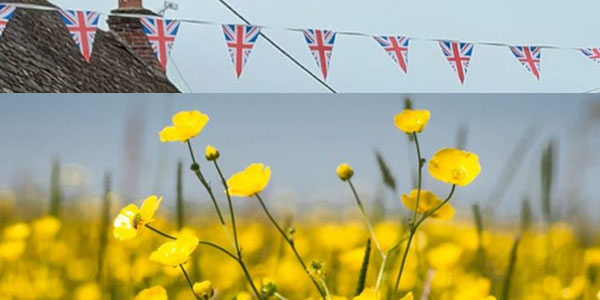
It had rained in the night and scents of wet earth wafted around me as I went along Cat Lane and onto the top road, The greens of the grasses and trees were still the fresh green of early summer, but the verges were glowing with tall stems of buttercups that pushed through the grasses; lots of them, brightly polished and gleaming with moisture and sun.
It was very quiet and I stopped to count how many sounds I could hear. There were blackbirds singing, a buzzard mewed, and somewhere nearby a lark joined in. I could just hear a tractor and some cattle in the distance and, at that moment, nothing more.
It was all very peaceful – a perfect day for a perfect occasion.

Bunting, flags and flowers

Coming back into the village from Stokes Lane, there were a few people, adjusting bunting or walking in the direction of The Trooper.
Bunting and flags were everywhere, lots of it, looking a little damp and limp but already picking up and flapping gently with every breath of air. Roses were in full flower and gardens looked as though they were joining in the party. People were bustling around opposite The Trooper and by the time I arrived, tables, small marquees fringed with more bunting, and chairs were ready already set out, and, yes, I was delighted to find lots of friends to chat to.
Groups of people were already arriving with cool boxes and Tupperware containers, and there was the sense of excitement and pleasure everywhere. By the time I headed for home, there seemed to be a mass exodus going in the direction of the village center.
Rain was in the forecast, but it was obvious that it wasn’t going to dampen anyone’s spirits. And no, I didn’t loose out at all because after lunch several kind friends called in armed with enough cakes and desserts to keep me going for several days!

Memories of the Jubilee

We will all have memories of that day, but the one I shall treasure is the sight of those regal buttercups, glowing like gold in the sunshine, and the village in its party dress of bunting.
They seemed symbolic of a deep and collective sigh of relief and pleasure that the last two years were finally behind us and we were at last able to get together again to celebrate a very special, national event.

Read More
This April was an unusually dry month and we were beginning to listen anxiously to the weather forecasts.

When the forecasters mention that another dry day is to follow, I wonder why it is that they always mention gardeners but not farmers. Surely it would be better to mention them a bit more often?
To the average gardener what the weather does or does not do is merely an irritating interruption to a very pleasurable hobby, whereas farmers depend on it for their livelihood.
In spite of, or perhaps because of, what the weather did over the winter and early spring this year, everything is looking wonderful now.

And did you see the bluebells? Every year I think they can’t get better, yet once again this year, I think they have been the best yet.

My daughter and son-in-law took me for a drive all round the villages near Bulbarrow one day just when they had reached their peak of perfection. It was a perfect day, not so bright that you couldn’t see things because of the glare, but rather that perfect light that glowed through the lanes of lime green tunnels of leafing trees. There was one lane in particular that had become an avenue of wood anemones that fringed the verges, framing trees and bluebells.
A sight I won’t forget in a hurry.

Out on Genevive one afternoon one day, I stopped to watch an enormous bumblebee working on a yellow rose that peeped through someone’s picket fence.

It was very heavy for the rose, which was a gorgeous buttery yellow single one. It stayed on this flower for what seemed like ages, not tucking any of the pollen away in a pollen sac, because it was probably a male, but gorging on each tiny stamen until – I kid you not – it tipped over backwards and almost fell off!
I like bumble bees, especially the really large, nice cosy, hairy ones that are harbingers of spring and the one I was watching was one of those, called Garden or Rural bumble bees.
Apart from a few birds and butterflies, that was the only thing that seemed that seemed to buzz, creep or fly down the lane, yet when I got back to my garden it was humming with things – bees, bee flies, beetle-y things, some butterflies, including a small blue one, and tiny moths.

My big pond is home to dozens of tadpoles and frogs.

Whilst sitting by the smaller pond, a slow worm made its way around the plants that border it just as something jumped out of the water and vanished from sight amongst some flowers.
Added to this, there are lots of signs that a hedgehog, possibly in the plural, is a regular visitor.

I was so delighted early one morning before 8 o’clock, to hear a cuckoo at our end of the village.

That same day (May 9th), there was one in Stalbridge Weston. I wonder if it was the same one.
The house martins are now serious about nesting instead of just flying round and round their old homes under my roof.
I also have great tits nesting in my nest box on the fence. Their family has now obviously hatched because I can hear them squeaking and both birds are on a non-stop treadmill of going back and forth to feed them.
I have watched them pecking at all sorts of plants, including the roses, helping to decrease the greenfly population I hope, although they are hopelessly outnumbered.
They were also obviously finding tasty infant food around the house martins’ nests and under the guttering.

One day a large ginger cat appeared, perched on the top of the nest box, peering into the hole.

I shouted at it but I only have a very small shout these days and it just looked at me.
I looked round for something to throw. In the end I flung a clothes brush roughly in its direction but I can no longer throw either so it ended up about 6 inches away from my feet.
In the end we stared each other out and finally it moved off, in a very leisurely way, into the apple tree and then, by means of walking on top of the fence, disappeared from view. Fortunately, the great tit parents were back very quickly, but not before I had planned the worst sort of end for all cats that visit my garden.

PS: I’m right off cats.

Read More

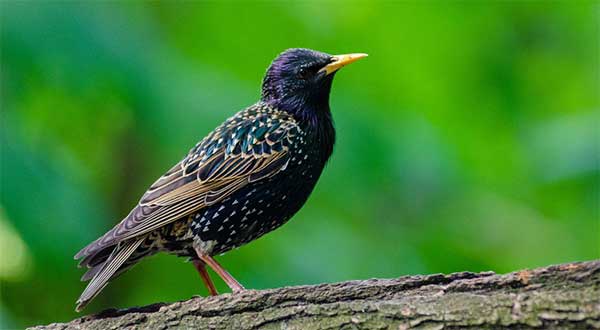
Injustice to Starlings

Late last autumn, I found my peanut holder on the lawn – again – its contents spilt all over the place.

Blow those starlings, I thought, because I always blame starlings for any garden mischief.
However, I was doing them an injustice because a moment later a large crow arrived and inspected the feeder closely. Then it turned it over and hoovered up the nuts on the ground.
I watched it for a moment then said to my daughter ‘That crow is moving the nut container round by the handle.’
So we both watched and, sure enough, it was grasping the handle, not just randomly seizing any other bit it could get hold of.
My daughter went out and returned it to its hook on the arbour before most of the nuts had been lost and we carried on chatting. A few moments later I glanced outside again and the nuts were once more strewn over the lawn with the crow feasting on them.
‘I think it’s that crow that’s knocking them off’ I said, so Fiona went back and hung them up once more.
Then we watched. We didn’t have to wait long because almost as soon as she had come back inside, there it was again.
And this time we could see quite clearly that it wasn’t just knocking the holder off – it was actually sitting above it and lifting it off the hook with its beak.
Fiona said, ‘Right, this time I’m going to tie it on.’
So back she went with a length of string and tied it on to its hook. ‘That’ll fool it,’ we said smugly.
Not a bit of it.
In no time, the crow was back again and we watched, open mouthed with amazement, as it proceeded to unpick the knot with its beak!
She retied it with extra knots, but next morning it was back in a near empty state rolling about on the lawn. I told Nikki, who did the garden for me. ‘Right,’, she said, a hint of battle in her eyes and off she went armed with a length of garden twine, tying it in such a way that even those who kindly refill it for me couldn’t get it off without the aid of a very sharp knife. But even that didn’t deter the persistent crow. Later that day he was back, trying to untie it, using both claws and beak.
But at last he was beaten.
His friend turned up to give him a hand (or beak and claw) and while he rested on the shed roof, his friend had a go. Eventually, they both gave up and flew off over the fence. I was telling Chas all about it, thinking that I had seen a wonderful, once in a lifetime feat of nature that I alone had seen. But ‘Oh good,’ said he, ‘you’ve put into words what’s been going on here for months.’ Claude (the crow) hasn’t been back since, so I think Chas has him back in his garden attacking his peanuts. Ha!

I’ve always thought that pigeons look rather odd!

With their small pinheads perched on their outsized bodies, and they have a ridiculous nesting habit of laying eggs on precarious platforms where eggs are quite likely to roll off and smash. Now a pair has landed in the ivy on the fence in the back garden. One of them seems to be sitting in it in a very purposeful sort of way, whilst its mate has been scratching around nearby on the ivy, in a hen-like manner. I’ve never seen pigeons behave this way before. There is something even more odd than usual about these two.
Meanwhile I have just been watching an example of perfect marital co-operation with a pair of blue tits. The male seemed to be in charge of DIY, pecking away at the hole in their nest box, whilst the wife was darting in and out of the ivy, collecting – who knows what? She then sat on top of the box for a moment or two, watching and probably giving advice, before he flew off and she disappeared inside. She was obviously in charge of interior design and decoration and every now and then her little head popped out, probably to check whether he was back when he said he would be, before disappearing from view again. When the male came back, off she flew back into the ivy. They each seemed to have a specific job to do and it was fascinating to watch how they worked together, preparing their home for very small newcomers. I’ve only seen this sort of thing on David Attenborough’s programme and it was fascinating to watch it for myself.

I do like blue tits, there is something so purposeful about them.

When we lived in Devon, I was walking round the pond on the Lower Moor one day when I was attracted by a lot of small tweetings. I could just see through the undergrowth a row of five little fluffy blue tit chicks all huddled together, whilst mum and dad flew back and forth constantly stuffing each gape with tasty little insects. They had obviously come out for a picnic. I felt very privileged to have seen such a sight.
On another occasion, still in Devon, Brian had spread out a surplus supply of apples in a shallow crate in the barn. One day, he called to me to come and see something. There was a little blue tit staggering around on top of the apples. As we watched, it fell over, feet akimbo. Horrified, I said, ’Is it dead?’ but Brian said, ’No, just dead drunk on a rotten apple’ He laid the little thing in a safe place, opened all the barn doors and we left it to sleep it off. I’m pleased to say that it must have woken up soon after, because there was no sign of it. Bet it had an awful hangover though.

Read More

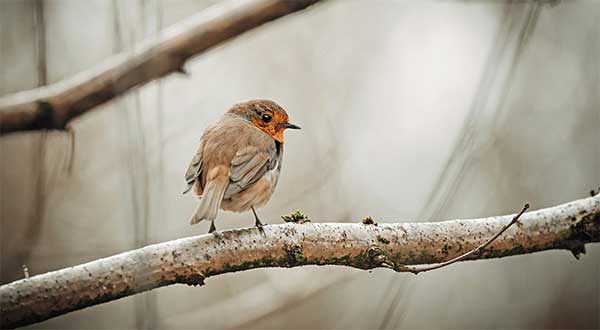
Richard the Robin has a lion heart and a crusading spirit

The sky had been stormy all morning, black, streaked with gold. Then the sun squeezed through a hole in the clouds and rain fell. But what rain!

It was blown at an acute angle across the lawn – golden rain that was so heavy that it fell, not in drops but in iridescent chains made up of links of shimmering diamonds that shrouded each blade of grass, encased the orange and pink rowan berries and lit up an ordinary world making it extraordinary. For perhaps thirty seconds it fell like that and I couldn’t move because I was caught up by the extraordinary beauty of it.
Then the moment passed. The sun vanished and rain fell, ordinary sheets of rain. But I shall never forget those moments when nature showed me something I had never seen before, the time when rain was so much more than ordinary.
That happened the week before the village’s spectacular and devastating rain that flooded several properties, including our beloved pub. Even my carer couldn’t find any way out of the village, having been able to get to me only three quarters of an hour before. It hasn’t caused so much chaos for over 50 years I’m told. In the face of such events, and together with others all over the world, how can anyone deny that we have already entered a dangerous phase of climate change?

But it’s mid-November and it will soon be Christmas so let’s think about something more cheerful. Let’s think about robins instead.

I have my own robin. I suppose everyone says this because we all get possessive about the one bird that comes to share our garden with us. You may possibly remember Mr Bocellii, a blackbird that Brian and I claimed was ‘ours‘. He was with us for three years, each year introducing us to his latest family, during which time he tapped on the window to remind us to put out some raisins on our door mat if they weren‘t there already. He stayed with us until he died when we found his little skeleton in the hedge right outside our garden doors. Since then I haven’t had such a friendly attachment with anything in the bird world.
Until now.

He is Richard the Robin

So called because he has a lion heart and a crusading spirit when it comes to fighting for what he believes in, ie., seeing off all competitors.
I have assumed he is a male but I could be wrong of course for male and female robins are almost identical. Mine however, just looks very masculine. I first noticed him in very early autumn when he was still a youngster with a speckly chest. He would sit nearby on the ramp and watch me with his bright, beady eyes, head to one side. Then his chest began to lose its speckles and gradually turned, first pale orange and then deepened to its familiar robin redbreast colour. He still sits on the rail of the ramp but is more likely now to be on the edge of a tall wooden trough that is closer to the window and trills away. A lovely sound when most birds are silent. He is quite recognisable because he has one white feather on his right wing.
Some robins, particularly female ones, fly to the continent at this time of the year where the food is more plentiful and there is less competition from others of their kind. Those that stay prefer the slightly milder climate of the west and, although insects are less easy to find at this time of the year, there is usually plenty of food for them in the hedges, hawthorn and ivy especially giving them plenty of energy. There are also plenty of gardens with bird feeders. Not that Richard uses the feeders even though he sometimes tries, but beneath it is a very useful place to scavenge for all those bits that have been dropped by others.

By December he will not sing quite so much as he has already claimed his territory.

If it gets very cold he will have to go into full maintenance mode and feed almost non-stop from early morning to late afternoon. He is able to do this better than other songbirds because he has such large, beady eyes. Even so, and even though he appears to have started the winter well fed, he could die of cold or fall victim to one of his many predators. He has only an evens chance of surviving until the following spring. Fingers crossed for Richard.
But for now here he is again, his image reproduced on so many millions of Christmas cards, pert, plump and as symbolic of the season as mince pies. Why? I wondered. Why robins? Well, he is much more noticeable from autumn on when other songbirds are silent and many are out of sight for much of the day. My little book says that when the custom of sending cards to celebrate birthdays and Christmas first began in Victorian times, postmen wore bright red uniforms and so earned the nickname ‘Robins’. As a consequence, the bird began to be reproduced on Christmas cards and was often depicted with a letter in his beak. Our present day postmen don’t wear bright red uniforms but post boxes and the vans still do.
There are numerous other reasons, many of them religious, but whatever the true one is, his appearance on our Christmas cards and almost everything else that is Christmas connected, he is as popular as ever.
May I wish all of you a very happy Christmas and, dare I say it? A much brighter new year than the previous two.

Read More